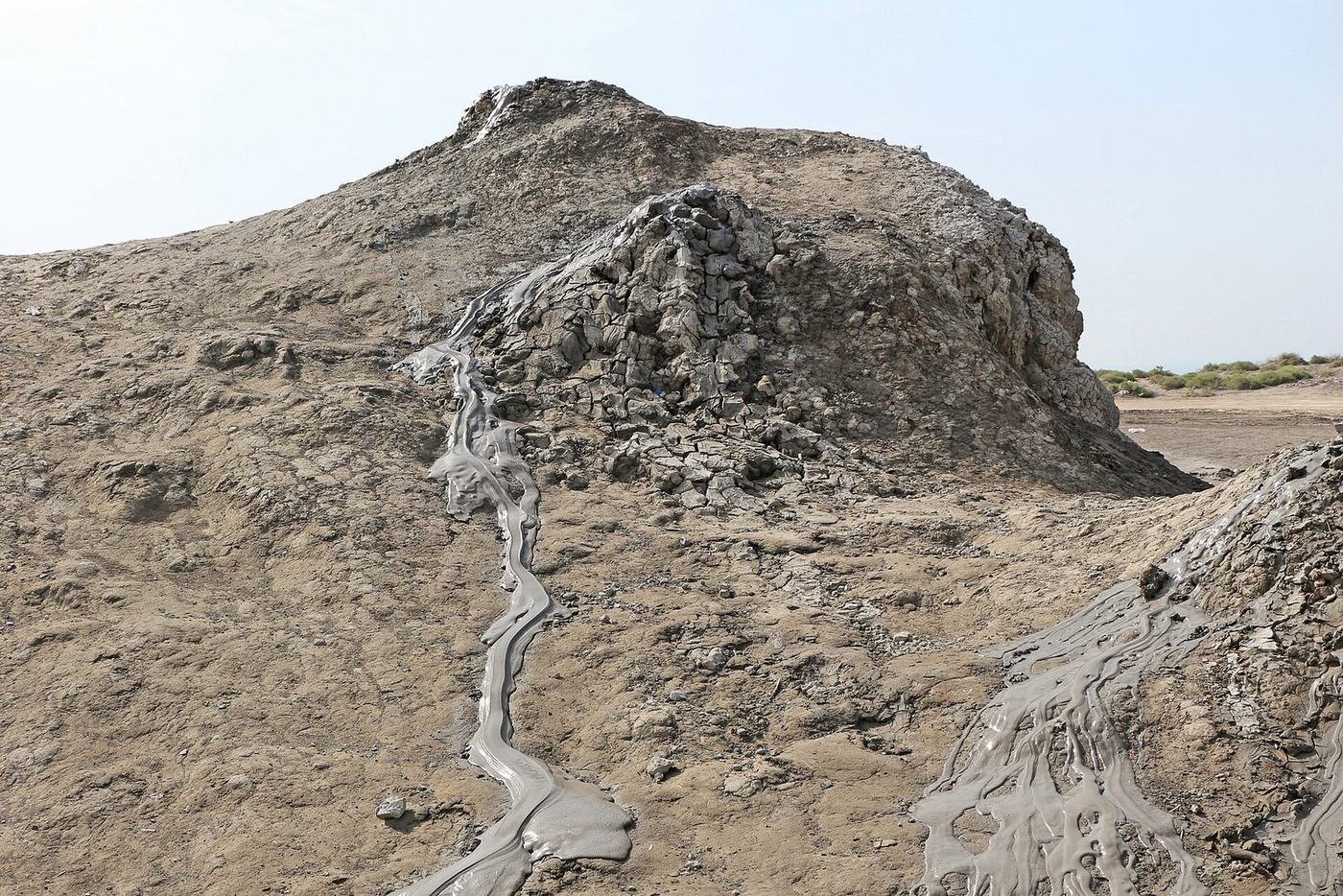
Fields of cones
Gobustan
The best-known cluster of mud volcanoes, beside the Gobustan rock carvings — dozens of cones and gryphons on lunar hills.
From Gobustan and Absheron to the Caspian floor and the archipelago islands.
Mud volcanoes are scattered across the whole east of Azerbaijan — where the land is rich in oil and gas. You can meet them in Gobustan and on the Absheron Peninsula, at the very edge of the Caspian and far out in its waters. More than 140 volcanoes are hidden underwater on the sea floor, and some islands of the Baku Archipelago are made entirely of volcanic mud.
The best-known cluster of mud volcanoes, beside the Gobustan rock carvings — dozens of cones and gryphons on lunar hills.

One of the most active volcanoes right by Baku, famous for powerful eruptions with bursts of flame.
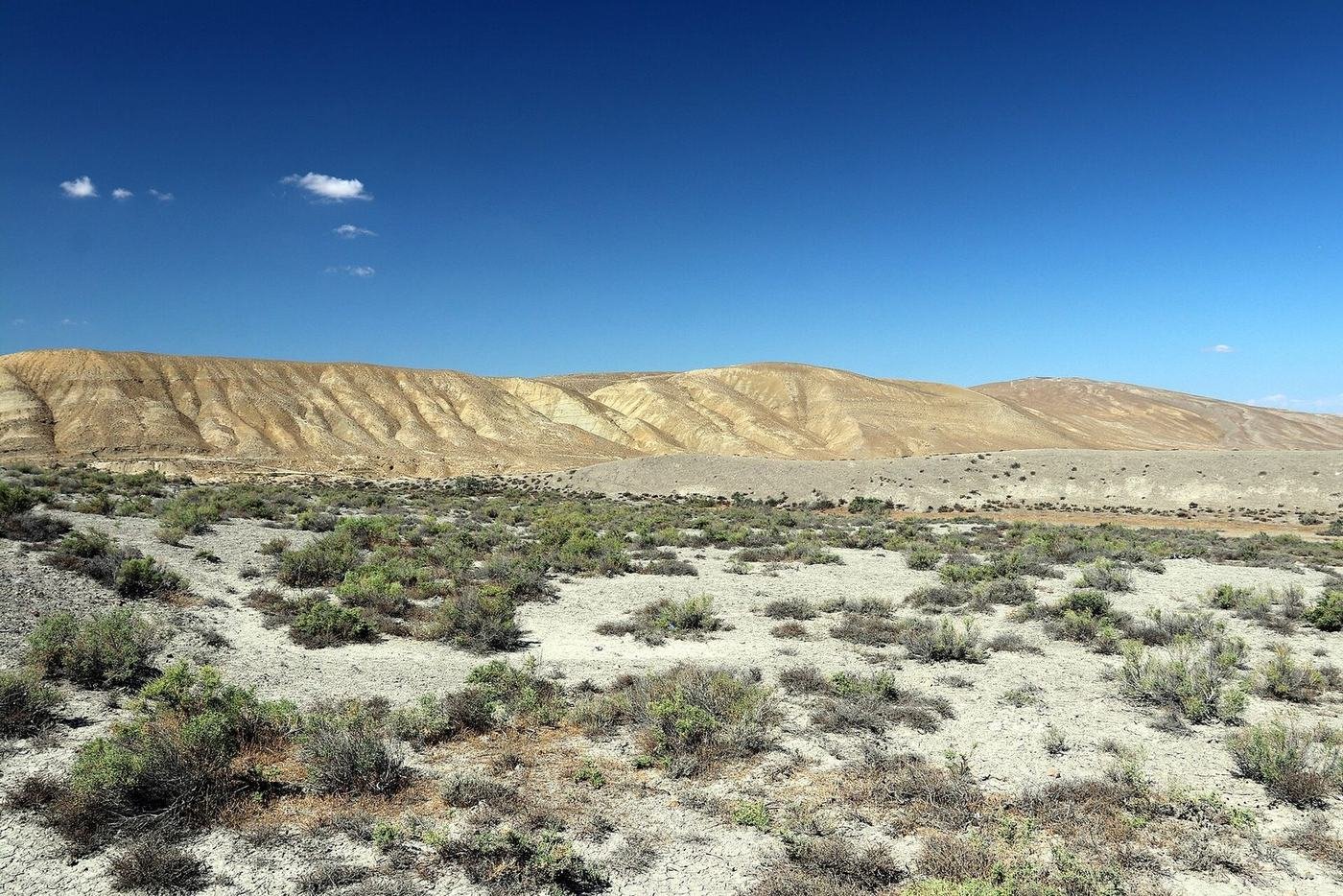
A large volcano with a wide crater strewn with dozens of bubbling gryphons and salses of liquid clay.
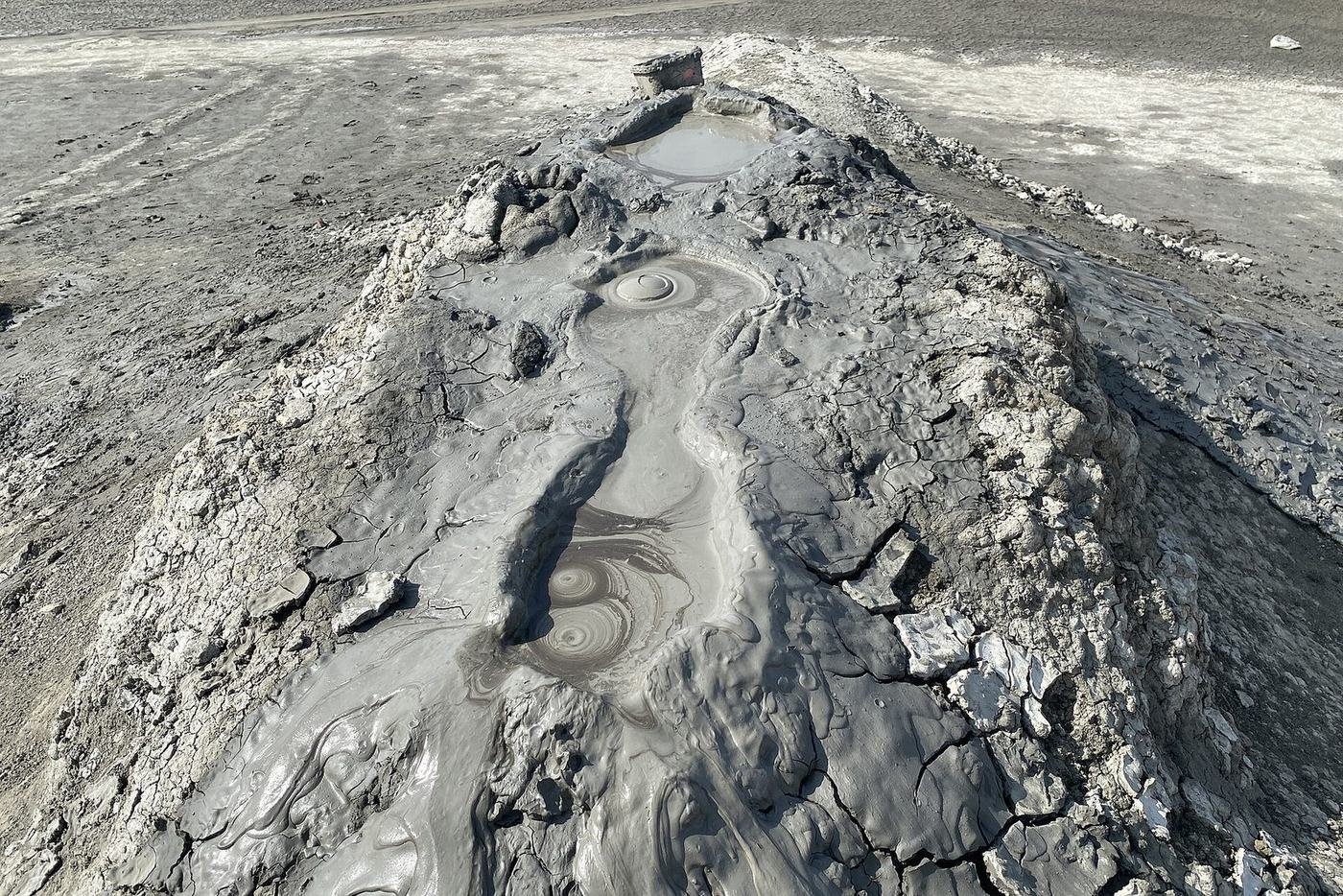
One of the largest mud volcanoes in the world — a real mountain built up by flows of dried mud over millennia.
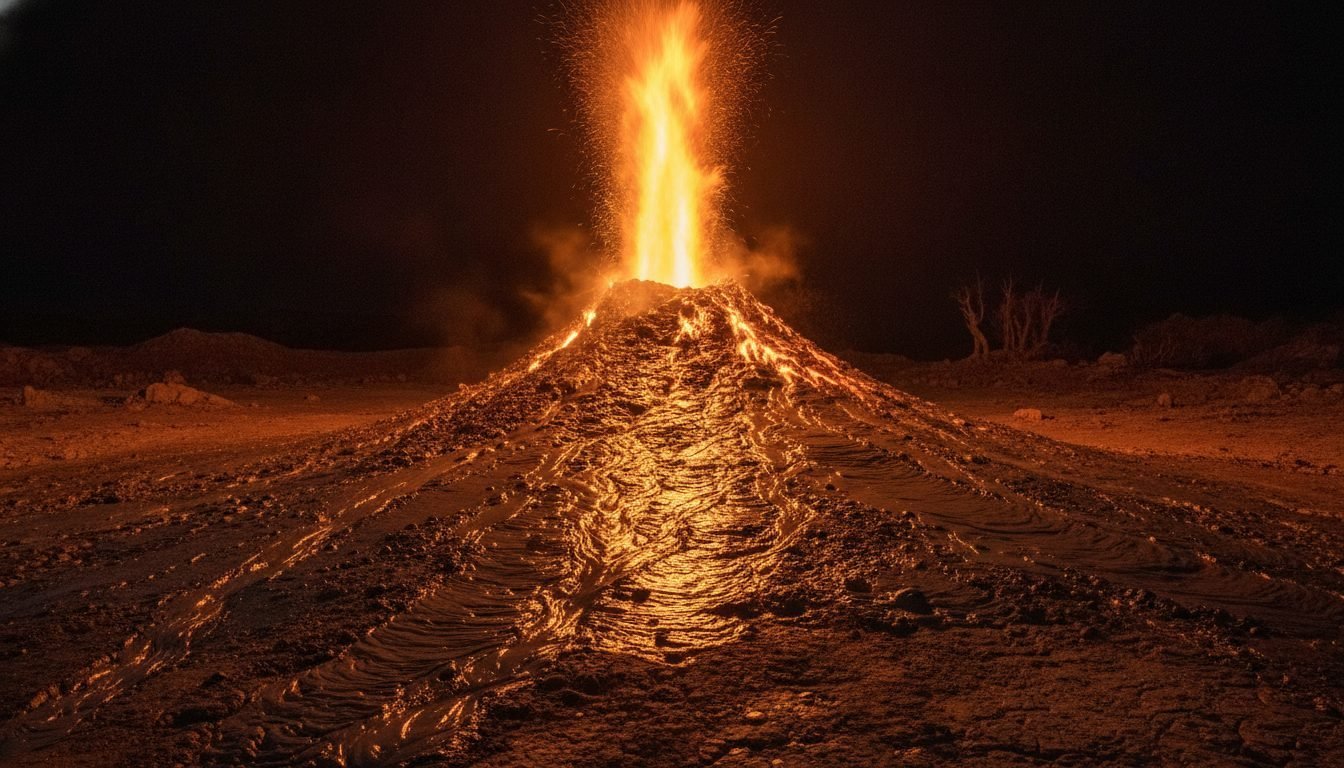
A volcano known for especially high fiery eruptions: when the methane ignites, the flame rises hundreds of metres.
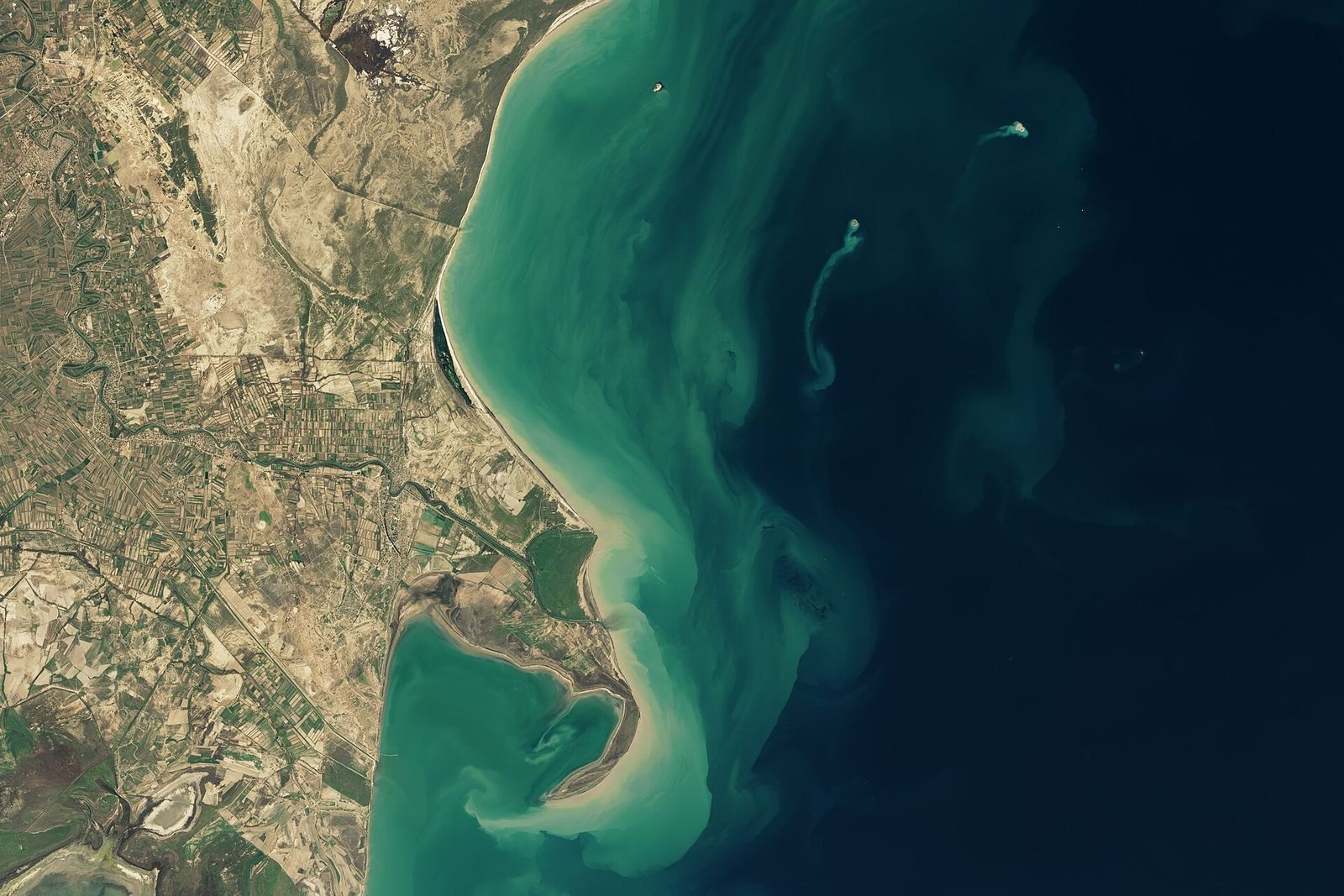
More than 140 volcanoes on the Caspian floor; several islands of the Baku Archipelago are made entirely of volcanic mud.
The exact number of volcanoes changes: some fall quiet, others are born, and the underwater ones are hard to count. But the sources agree on one thing — nowhere in the world are there as many as in Azerbaijan.