Mud & Tourism
Healing mud, science and a trip to the volcanoes.
Clay that heals
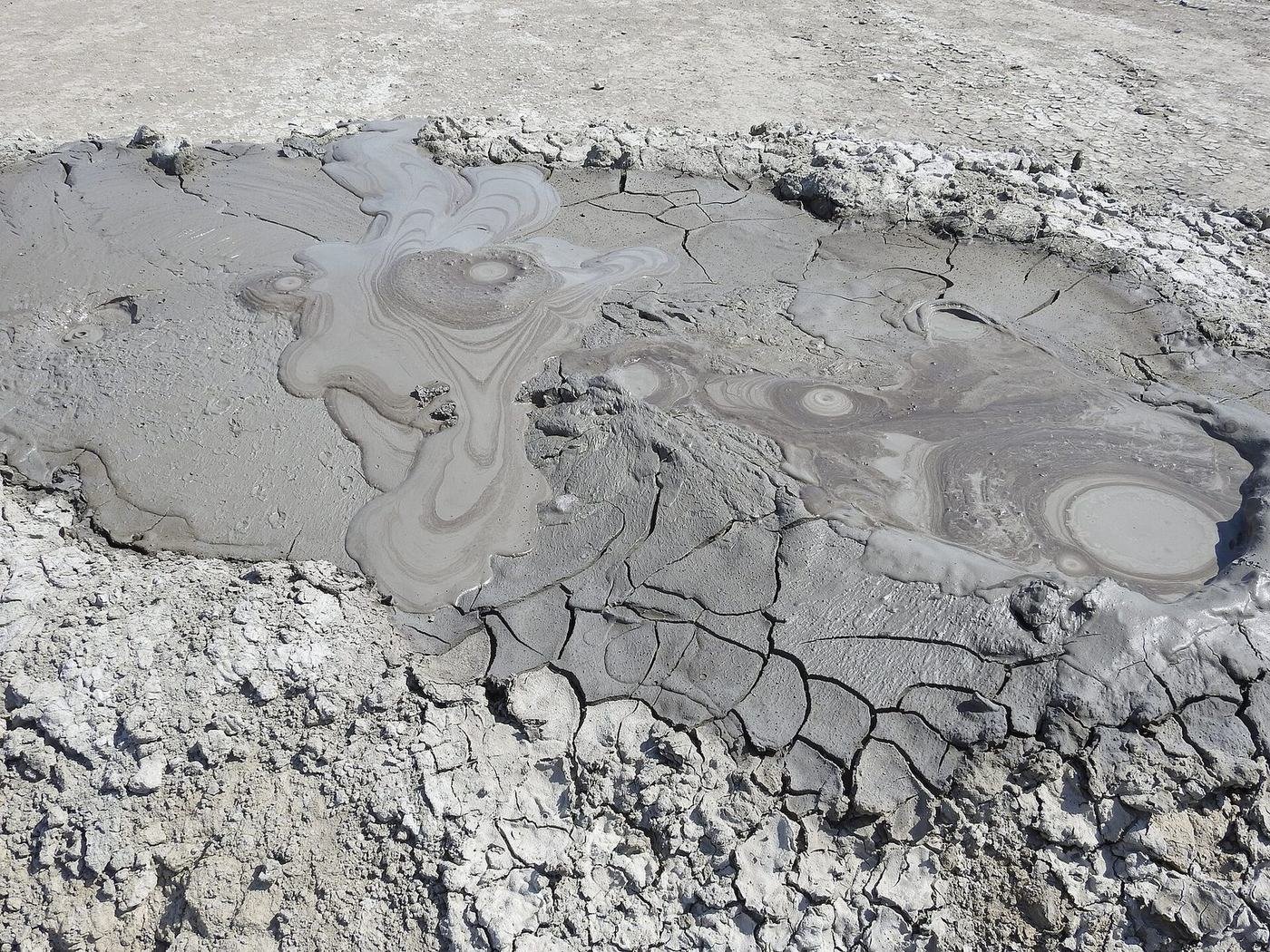
The mud of the volcanoes is not just a curiosity. It is rich in minerals and has long been used in cosmetics and balneology: mud wraps and baths are thought good for the skin and joints. Volcanic clay is also used in industry — from construction to pharmacology.
From science to travel
The mud volcanoes have long become both a scientific value and a draw for tourists. Part of the territory has been given the status of a nature reserve, and infrastructure for travellers is being built beside the most accessible fields. Today a trip to the volcanoes is a popular addition to a Gobustan excursion.
A trip to the volcanoes
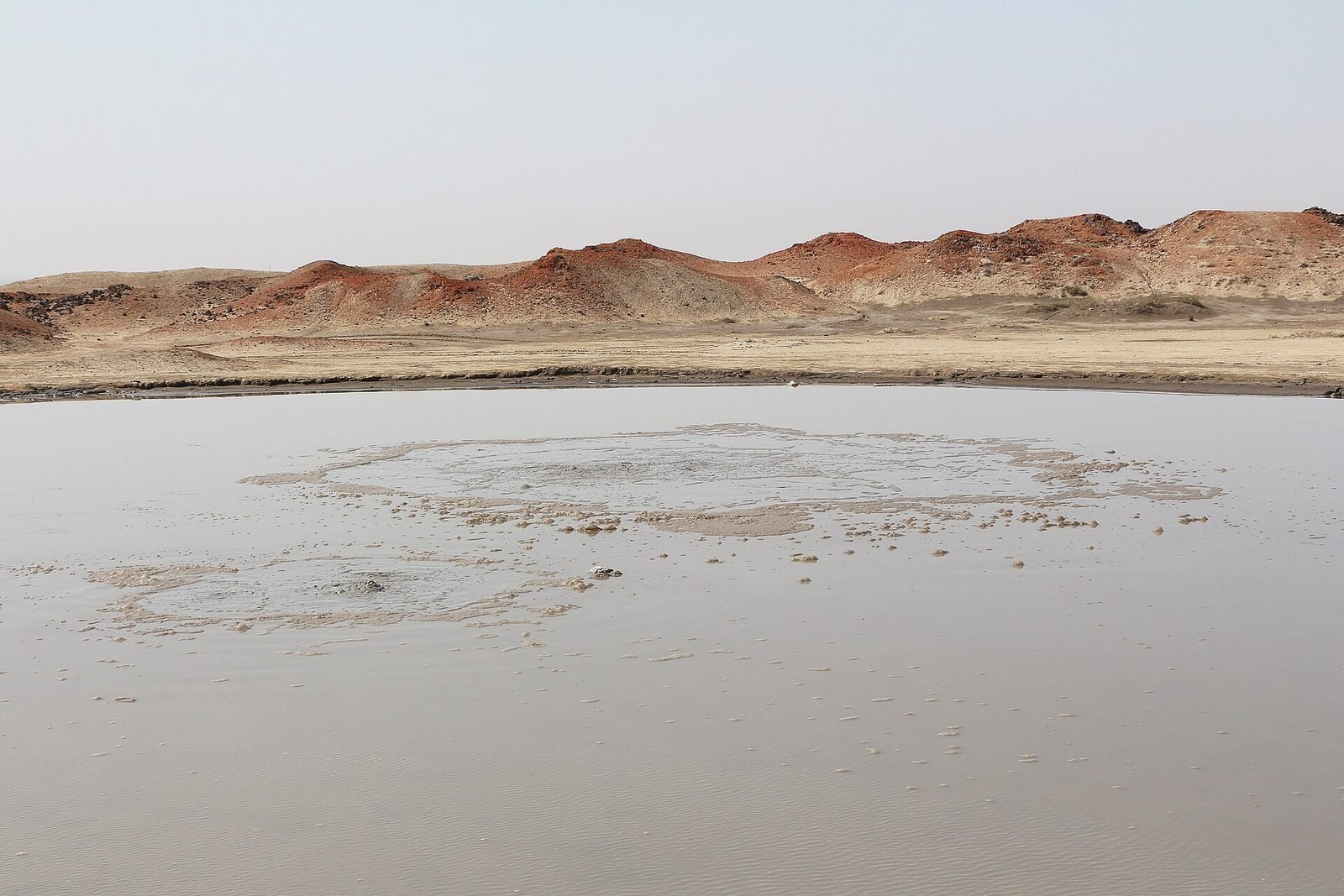
The most accessible mud volcanoes are in the Gobustan district, south-west of Baku, near the famous rock-art museum. They are reached by car; the road to the volcano fields runs over rough terrain, so it is easier to go with a local guide or in an off-roader. The best time is dry weather: after rain the clay becomes slippery.
The essentials, briefly
A cold cone from which, under the pressure of gas, a mixture of water and clay rises. It is not magma: instead of lava, liquid mud and gas, mostly methane, come out.
About 350–400 — nearly half of all the mud volcanoes on the planet. More than 140 of them are underwater, on the floor of the Caspian Sea.
In a quiet state, no — you can approach them. But eruptions can be sudden, with bursts of gas, mud and flame, so active volcanoes are treated with caution.
Yes. During an eruption the methane often ignites, and a column of flame rises over the volcano — at some volcanoes it rose hundreds of metres.
Volcanic mud is rich in minerals; it is used in cosmetics and balneology — for wraps and baths — as well as in industry.
The most accessible fields are in the Gobustan district near Baku, beside the rock-art museum. It is easiest to go with a guide or in an off-roader in dry weather.
Come to Gobustan on a dry day — and the earth itself will show you how it breathes gas and clay.